Light sensors on wearables struggle with dark skin and obesity
Apple Watch | Photo by Amelia Holowaty Krales / The Verge Light sensors used to track heart rate in wearable devices like the Apple Watch Series 5 and the Fitbit Versa 2 don’t work as well on darker skin or people with obesity, according to modeling done in a new study. That’s a problem for features currently built into devices — but it’s also a bad sign for efforts to use light sensors for new applications in wearables, like monitoring blood pressure, says study author Jessica Ramella-Roman, an associate professor studying bioimaging sensors at Florida International University. “The architecture of the device has to change,” she says. The study looked at the photoplethysmography (PPG) signal, a technique that uses changes in how light is reflected to measure blood flow, on three wearable... Continue reading…
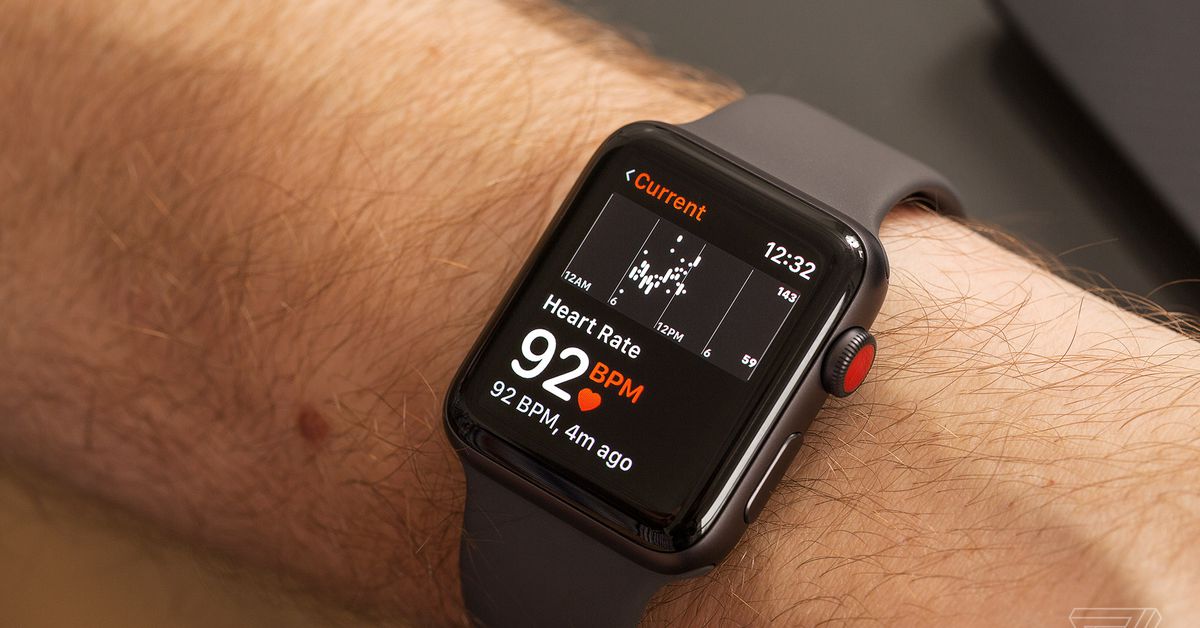

Light sensors used to track heart rate in wearable devices like the Apple Watch Series 5 and the Fitbit Versa 2 don’t work as well on darker skin or people with obesity, according to modeling done in a new study.
That’s a problem for features currently built into devices — but it’s also a bad sign for efforts to use light sensors for new applications in wearables, like monitoring blood pressure, says study author Jessica Ramella-Roman, an associate professor studying bioimaging sensors at Florida International University.
“The architecture of the device has to change,” she says.
The study looked at the photoplethysmography (PPG) signal, a technique that uses changes in how light is reflected to measure blood flow, on three wearable...