This Week in Apps: Elon wants out, TikTok’s content ratings, a new milestone for subscription revenue
Welcome back to This Week in Apps, the weekly TechCrunch series that recaps the latest in mobile OS news, mobile applications and the overall app economy. Global app spending reached $65 billion in the first half of 2022, up only slightly from the $64.4 billion during the same period in 2021, as hypergrowth fueled by […]

Welcome back to This Week in Apps, the weekly TechCrunch series that recaps the latest in mobile OS news, mobile applications and the overall app economy.
Global app spending reached $65 billion in the first half of 2022, up only slightly from the $64.4 billion during the same period in 2021, as hypergrowth fueled by the pandemic has slowed down. But overall, the app economy is continuing to grow, having produced a record number of downloads and consumer spending across both the iOS and Google Play stores combined in 2021, according to the latest year-end reports. Global spending across iOS and Google Play last year was $133 billion, and consumers downloaded 143.6 billion apps.
This Week in Apps offers a way to keep up with this fast-moving industry in one place with the latest from the world of apps, including news, updates, startup fundings, mergers and acquisitions, and much more.
Do you want This Week in Apps in your inbox every Saturday? Sign up here: techcrunch.com/newsletters
Top Stories
TikTok is getting a rating system
Some TikToks are too racy or mature for younger teens — a problem TikTok aims to address with the upcoming launch of a new content ratings system. The “Content Levels” system, as it will be called, is meant to provide a means of classifying content on the video app — similar to how movies, TV shows and video games today feature age ratings.
TikTok acknowledged some content on its app may contain “mature or complex themes that may reflect personal experiences or real-world events that are intended for older audiences.” It will work to assign these sorts of videos a “maturity score” that will block them from being viewed by younger users. Not all videos will be rated, however. The goal will be to rate videos that get flagged for review and those that are gaining virality. Initially, the system will focus on preventing inappropriate content from reaching users ages 13 to 17, TikTok says, but will become a broader system over time.
The launch follows a 2021 congressional inquiry into social apps, including TikTok and others, which focused on how their algorithmic recommendation systems could be promoting harmful content, like eating disorder content, to younger users. TikTok has also been making headlines for its promotion of dangerous and destructive viral stunts, like kids destroying public school bathrooms, shooting each other with pellet guns or jumping off milk crates, among other things.
TikTok, like other social apps, is in hot water over the potential negative impacts to minors using its service. But it’s under particular scrutiny since the reveal that parent company ByteDance — in China — was accessing U.S. TikTok user data. Alongside the maturity ratings, TikTok says it will also launch content filters that will let users block videos with hashtags or certain words from their feeds.
For all its ills, TikTok has more developed parental controls than its U.S. rivals and the launch of a content ratings system could push other apps reaching minors, like Instagram and Snapchat, to do the same.
Will he or won’t he? The Twitter deal heads to court
Elon wants out. The Tesla and SpaceX exec has got a serious case of buyer’s remorse. Musk offered to buy Twitter at $54.20 per share — it’s a weed joke! Get it? 420! — but the stock today is only trading at $36.29 per share. So it’s not so funny anymore. Now the exec is attempting to use some flimsy excuses about “bots” on the network in order to get out of the legal agreement. But Twitter just said, see you in court! (Well, in legalese, it said Musk’s termination was “invalid and wrongful.”) Twitter then delivered a few more jabs in a letter filed with the SEC, noting Musk “apparently believes that he — unlike every other party subject to Delaware contract law — is free to change his mind, trash the company, disrupt its operations, destroy stockholder value, and walk away.” Burn!
Sadly, caught in the chaos are Twitter’s advertisers, some of whom are exiting, and of course, the Twitter employees who often don’t know what’s going on, who will prevail or what Musk may do if the deal is forced through. (Vent here if you want!) And what does this mean for Twitter’s conference Chirp later this year, if the deal is still in limbo?
This has been such a weird and fraught acquisition since day one, with some poor folks at the SEC having to collate tweets of poop emoji and memes as investor alerts. It’s also one that makes a pretty good case as to why we should tax billionaires more — too much money turns large companies and people’s livelihoods into toys for their amusement, apparently.
Non-game revenue tops games for the first time on the U.S. App Store
Image Credits: TechCrunch
A major shift in the U.S. app economy has just taken place. In the second quarter of this year, U.S. consumer spending in non-game mobile apps surpassed spending in mobile games for the first time in May 2022, and the trend continued in June. This drove the total revenue generated by non-game apps higher for the quarter, reaching about $3.4 billion on the U.S. App Store, compared with $3.3 billion spent on mobile games.
After the shift in May, 50.3% of the spending was coming from non-game apps by June 2022, according to new findings in a report from app intelligence firm Sensor Tower. By comparison, games had accounted for more than two-thirds of total spending on the U.S. App Store just five years ago.
The trend was limited to the U.S. App Store and was not seen on Google Play, however. In Q2, games accounted for $2.3 billion in consumer spending on Google Play in the U.S., while non-game apps accounted for about $1 billion. Read more about the new data here.
Kids and teens now spend more time on TikTok than YouTube
Image Credits: Nur Photo (opens in a new window) / Getty Images
A study of 400,000 families performed by parental control software maker Qustodio found that kids and teens ages 4-18 now spend more time watching videos on TikTok than they do watching YouTube — and that’s been the case since June 2020, in fact. That month, TikTok overtook YouTube for the first time, as this younger demographic began averaging 82 minutes per day on TikTok versus an average of 75 minutes per day on YouTube.
YouTube had still been ahead in 2019 as kids and teens were spending an average of 48 minutes on the platform on a global basis, compared with 38 minutes on TikTok. But with the shift in usage that took place in June 2020, TikTok came out on top for 2020 as a whole, with an average of 75 minutes per day, compared with 64 minutes for YouTube.
In the years since, TikTok has continued to dominate with younger users. By the end of 2021, kids and teens were watching an average of 91 minutes of TikTok per day compared with just 56 minutes per day spent watching YouTube, on a global basis.
Likely aware of this threat, YouTube launched its own short-form platform called Shorts, which it now claims has topped 1.5 billion logged-in monthly users. The company believes this will push users toward its long-form content — but so far, that hasn’t happened, it seems. Read the full report here.
TikTok is eating into Google Search and Maps, says Google
In a bit of an incredible reveal (if one that helps Google from an anticompetitive standpoint), a Google exec admitted that younger people’s use of TikTok and Instagram is actually impacting the company’s core products, like Search and Maps.
TechCrunch broke this news following comments made at Fortune’s Brainstorm Tech event this week.
“In our studies, something like almost 40% of young people, when they’re looking for a place for lunch, they don’t go to Google Maps or Search,” said Google SVP Prabhakar Raghavan, who runs Google’s Knowledge & Information organization. “They go to TikTok or Instagram.”
Google confirmed to us his comments were based on internal research that involved a survey of U.S. users, ages 18 to 24. The data has not yet been made public, we’re told, but may later be added to Google’s competition site, alongside other stats — like how 55% of product searches now begin on Amazon, for example.
Weekly News
Platforms: Apple
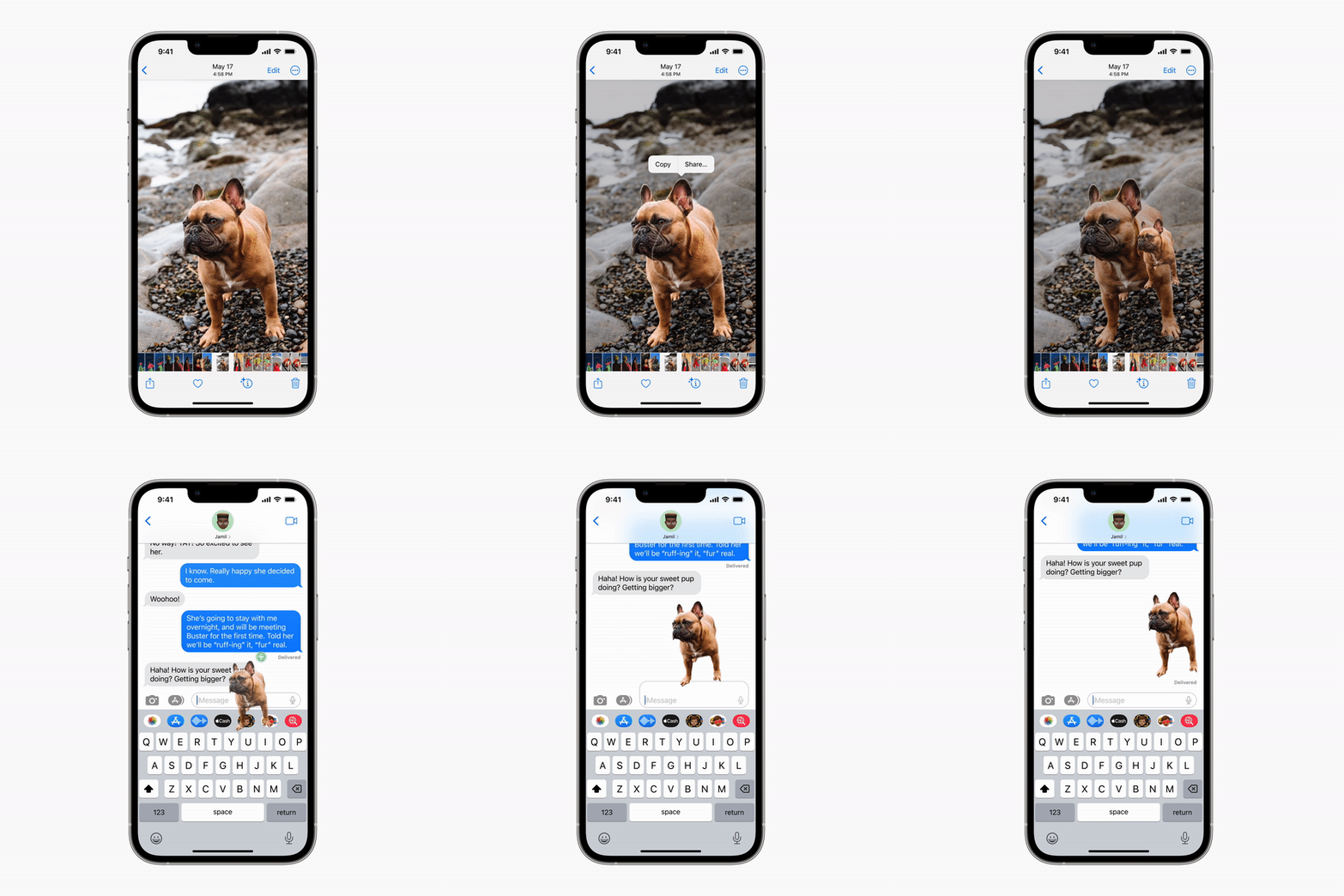
- The iOS 16 public beta has arrived. It’s here, it’s surprisingly functional, and it brings a number of great new features to iPhone users, including a customizable Lock Screen with support for new Lock Screen widgets, more granular Focus Mode features, an improved messaging experience with an Undo Send option, SMS filters, iCloud Shared Photo Library for families, CAPTHCA bypassing and this clever new image cutout feature that lets you “pick up” objects from photos and copy them into other apps. On iPadOS 16, there are a number of specialized features, including the new Stage Manager multitasking interface.
Apple’s new visual lookup feature. Image Credits: Apple
Platforms: Google
- Samsung rolled out its One UI 4.5 update for Galaxy Watches, which is powered by Wear OS 3.5. The update includes a full QWERTY keyboard, customizable watch faces and dual-SIM support, and will run on the Galaxy Watch4, the Galaxy Watch4 Classic and other models.
- Google expanded its Play Games for PC beta, which brings Android apps to Windows, to more regions, including Thailand and Australia.
- Google released the fourth and final Android 13 beta ahead of its official launch, which the company says is “just a few weeks away.” There were not many changes with this update, as Google already reached platform stability with Android 13 beta 3 last month.
E-commerce
- TikTok launched a new educational program targeting small businesses that want to learn how to use its platform to drive sales. The launch follows TikTok’s decision to pause the expansion of its Shop initiative. The program walks businesses through setting up an account, creating content and using TikTok ads products, and features coaching and tips from other SMBs.
- NYC fast delivery apps could face a shutdown if new bills proposed by New York’s City Council get approved. The city is concerned about the dark stores’ workers’ safety.
Augmented Reality
- Shopify showed off a wild internal experiment using Apple’s new RoomPlan API that allowed users to more easily reset their room in order to see how new furniture could work. The test lets you remove the furniture already in your room to create a lifelike digital twin of your room that can be overlaid in your real space using AR. Users could then swipe through new room sets to see how they’d look in their own space. Spotify said it has nothing in production related to this right now — but wow, someone should!